
Think your dog’s paw licking is just a bad habit?
It’s often a sign of something skin-deep: allergies, infection, injury, or even stress.
Constant licking creates a damaging cycle: more moisture, more inflammation, more licking.
In this post I’ll explain the most common causes, simple at-home checks and safe tips to try tonight, and clear signs that mean it’s time to call your vet.
Read on to learn how to spot the cause fast and take the right next step for your dog’s comfort.
Why Your Dog Is Licking Its Paws: The Most Common Causes (Explained Fast)

When your dog won’t stop licking and chewing its paws, something’s bothering the skin or causing discomfort. Most paw licking comes from inflammation caused by allergens, infections, or irritants that make the skin itchy, painful, or just plain uncomfortable. Dogs lick to soothe the feeling. But constant licking creates a cycle: more trauma, more moisture, worse problem.
Allergies are the most common reason for chronic paw licking. Environmental allergens (pollen, grass, mold spores, dust mites) trigger inflammatory reactions that show up on the paws, face, ears, and belly. Food sensitivities to proteins like chicken, beef, or dairy can also cause paw inflammation and stomach upset. Both types usually start between 1 and 5 years old and show up either seasonally or year round depending on what’s triggering it.
Infections and parasites come next. Yeast infections love the warm, moist spaces between toes. They smell musty or like moldy cheese. Bacterial infections cause redness, swelling, sometimes a bad odor. Fleas, mites, and other parasites cause sudden, intense itching that might focus on one paw or spread everywhere. Injuries (dry cracked pads from hot pavement or ice melt, embedded stuff like foxtails or burrs) also cause focused licking. Anxiety and boredom can turn into obsessive licking as a self-soothing behavior, sometimes creating thick, hairless patches called lick granulomas.
Here’s what’s most likely, in order:
- Environmental or food allergies (most common, often chronic or seasonal)
- Yeast or bacterial skin infections (usually secondary to allergies or licking)
- Fleas, mites, or other parasites (sudden start, intense scratching)
- Dry, cracked, or burned paw pads (hot pavement, sand, ice melt chemicals)
- Foreign bodies like foxtails, grass awns, or burrs (usually one paw, sudden limping)
How to Identify What’s Causing Your Dog’s Paw Itching

Spotting the specific signs helps you narrow down the cause and figure out what to do. Start with which paws are affected. If it’s just one foot with sudden limping, think injury or foreign object. If multiple paws are red and your dog’s licking constantly, allergies or infection are more likely.
Look closely at the skin between the toes and on the pads. Redness, swelling, moist patches mean inflammation or infection. Brown or rust staining on light fur is a telltale sign of chronic licking (that’s from saliva). A foul or musty odor points to yeast or bacterial infection. Cracked, peeling pads mean dryness or chemical irritation. If you see debris, a dark speck, or a small puncture wound, a foreign body might be embedded.
Watch your dog’s behavior alongside the physical signs. Obsessive licking that wakes them at night or happens after meals often ties to allergies. Limping, whining, or not wanting to walk suggests pain from an injury or embedded object. Sudden, frantic scratching or chewing after being outside can mean flea bites or contact with an irritant like lawn chemicals. Seasonal flare ups every spring or summer point to environmental allergens like pollen or grass.
Common Conditions That Trigger Paw Licking and Itching
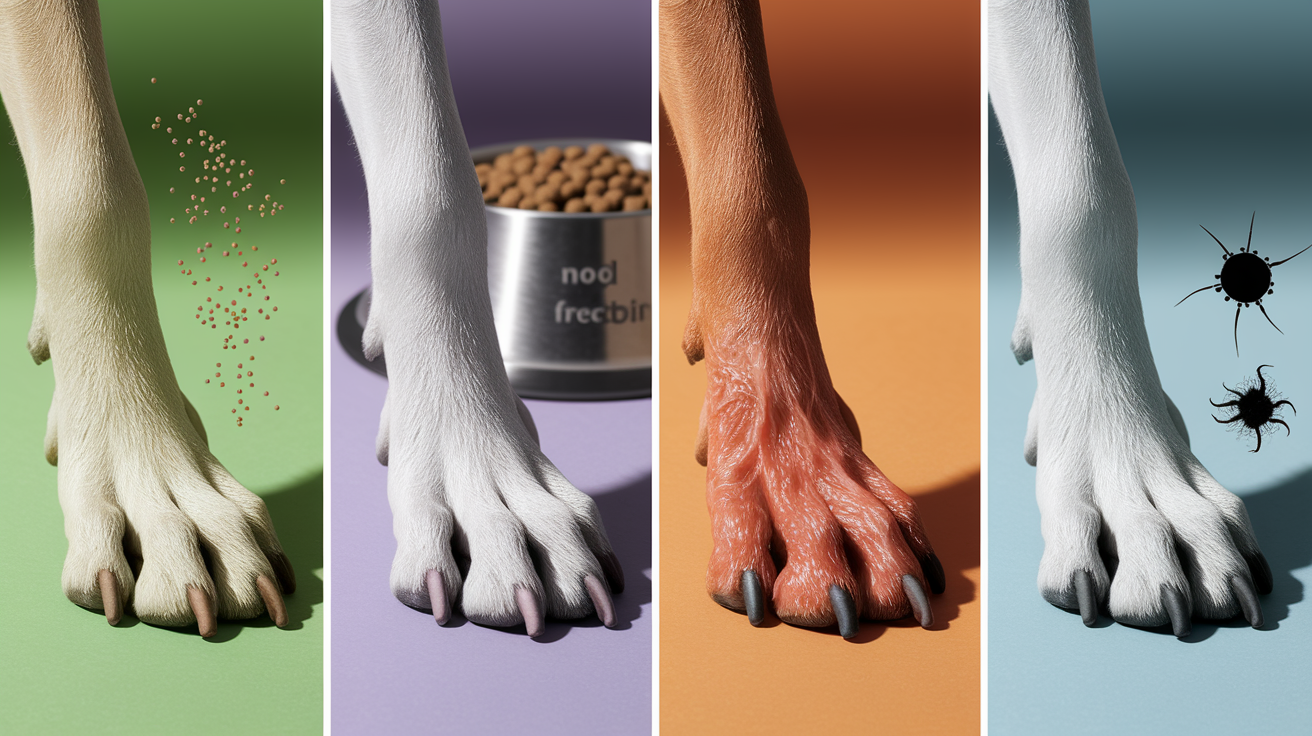
Environmental and Seasonal Allergies
Environmental allergens (pollen, grass, mold spores, dust mites) are the second most common allergic skin disease in dogs. This condition, called atopic dermatitis, is a chronic inflammatory disease that typically starts between 1 and 5 years of age. Dogs with atopic dermatitis develop itchy, inflamed skin on their paws, face, ears, belly, and armpits when they inhale or touch the allergens.
Symptoms often follow a seasonal pattern. Spring and summer flare ups suggest tree or grass pollen. Year round itching points to indoor allergens like dust mites or mold. Many dogs show their worst symptoms during their region’s peak pollen season and improve a bit in winter. The constant licking and scratching cause trauma to the skin, which opens the door to secondary bacterial and yeast infections that make the itch and discomfort worse.
Food Sensitivities
Food allergies develop when a dog’s immune system reacts to specific proteins in the diet. Most commonly chicken, beef, dairy, or wheat. Unlike environmental allergies, food sensitivities can cause itchy paws alongside stomach issues like vomiting, diarrhea, or soft stools. Some dogs have both food and environmental allergies at the same time, which makes diagnosis trickier.
The only reliable way to diagnose a food allergy is through an elimination diet. Your vet will prescribe a diet using a novel protein and carbohydrate your dog has never eaten before (think venison and sweet potato, or bison and peas), or a hydrolyzed diet where proteins are broken into tiny fragments the immune system won’t recognize. You must feed only that diet for the period your vet recommends, usually 8 to 12 weeks, with no treats, table scraps, or flavored medications. If symptoms improve and then flare when you reintroduce the old food, you’ve confirmed the food allergy.
Yeast or Bacterial Infections
Yeast infections, caused by an organism called Malassezia, thrive in warm, moist areas between the toes and on paw pads. The hallmark signs are a musty, moldy cheese smell, brown or rust staining on the fur, and greasy or sticky skin. Dogs with allergies are especially prone to recurrent yeast overgrowth because inflammation and moisture from licking create the perfect environment.
Bacterial infections (often called pyoderma) frequently develop as secondary complications when dogs lick and scratch their paws. The skin becomes red, swollen, painful, and may develop pustules or ooze pus. A bad odor accompanies many bacterial infections. Both yeast and bacterial infections make itching worse, which drives more licking, which worsens the infection. It’s a frustrating cycle that usually needs veterinary treatment with antifungal or antibiotic medications and medicated shampoos.
Parasites or Paw Injuries
Fleas are a leading cause of sudden, intense itching. Flea saliva triggers an allergic reaction in many dogs that can last for weeks after a single bite. Check for fleas by parting the fur and looking for tiny dark specks (flea dirt) or live fleas scurrying across the skin. Mites like sarcoptes (scabies) or demodex burrow into or live on the skin and cause severe itching, hair loss, and crusty lesions.
Paw injuries include cuts, burns from hot pavement, cracked pads from ice melt or rough terrain, and embedded foreign objects like foxtails or grass awns. Foxtails are V shaped plant seeds that can burrow into the skin between toes, causing sudden limping, swelling, redness, and infection. If your dog starts obsessively licking one paw after a hike or lawn time, inspect carefully for splinters, thorns, or plant material. Injuries usually affect just one paw and come with obvious pain or limping, which helps tell them apart from allergies or infections that affect multiple paws.
Safe Home Remedies to Soothe Your Dog’s Itchy Paws

You can try several safe, gentle measures at home to ease mild paw itching while you figure out the cause or wait for a vet appointment.
Wipe paws after walks. Use unscented baby wipes, hypoallergenic pet wipes, or a damp cloth to remove pollen, grass, and other allergens from paw pads and between toes after every outdoor trip.
Apple cider vinegar soak or spray. Dilute apple cider vinegar 50/50 with water and use it as a paw soak for a few minutes or spray it lightly on affected areas to help balance skin pH and reduce yeast.
Epsom salt soak. Soak the affected paw in lukewarm water mixed with Epsom salt for 10 to 15 minutes to soothe irritation and try to draw out minor debris. Just keep your dog from drinking the soak water.
Lukewarm baths with gentle shampoo. Bathing with a moisturizing or hypoallergenic pet shampoo rinses away surface allergens and soothes irritated skin. Avoid human shampoos unless your vet approves them.
Paw balms for dry or cracked pads. Apply a vet approved paw balm to restore moisture and create a protective barrier on dry, cracked pads caused by heat, cold, or rough terrain.
Protective boots. Use rubber or fabric dog boots to shield paws from hot pavement, ice melt, sand, or allergens during walks.
Home remedies work best for mild, recent symptoms with no signs of infection or injury. If your dog’s paws are red, swollen, smelly, or painful, or if licking is obsessive and nonstop, home care alone won’t solve the problem. These measures can provide temporary relief while you monitor symptoms, but they shouldn’t replace veterinary diagnosis and treatment for persistent or worsening issues.
When Paw Licking Means Your Dog Needs a Vet
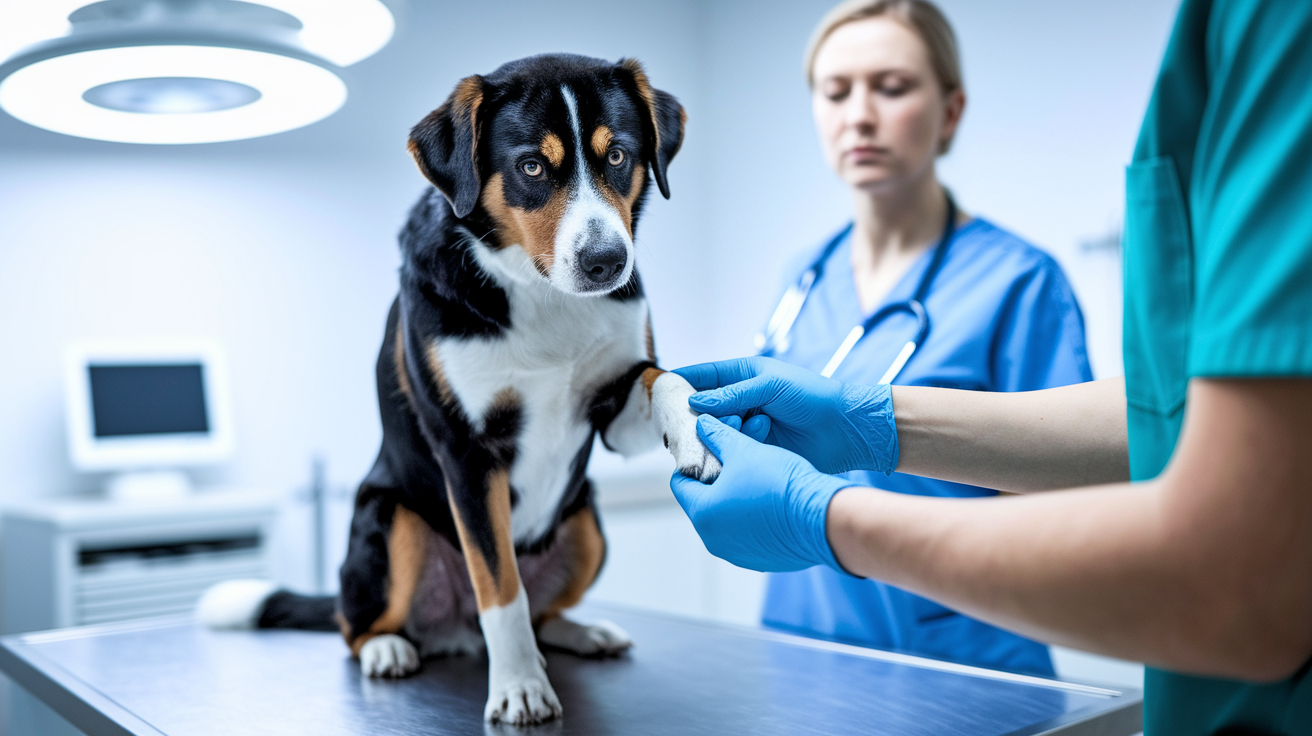
Certain warning signs tell you it’s time to stop home remedies and get professional help. If your dog’s paw is swollen, warm to the touch, or has a foul odor, a bacterial or yeast infection is likely progressing and needs prescription medication. Persistent redness that spreads, any bleeding or open wounds, or discharge with pus or an odd smell all signal infection or deeper injury that requires veterinary care.
Limping, reluctance to walk, or obsessive licking focused on one paw often means a foreign body like a foxtail is embedded, or there’s a painful injury you can’t see from the outside. Your vet may need to sedate your dog to remove the object safely or examine the paw thoroughly. If your dog is scratching, licking, or biting so intensely that it’s causing hair loss, scabs, or raw skin, the cycle of trauma and inflammation is getting worse and medical intervention is essential to break it.
Any symptom that lasts beyond 3 to 5 days without improvement deserves a vet visit. Chronic or seasonal paw licking that keeps returning points to allergies or another underlying condition that needs diagnostic testing and a long term management plan. Early veterinary evaluation reduces the risk of secondary infections, prevents pain, and gets your dog relief faster.
How to Prevent Future Paw Licking and Itching

Prevention starts with routine paw hygiene. Wipe or rinse your dog’s paws after every walk to remove pollen, grass, dirt, and chemical residues before they irritate the skin or get licked off. Dry the paws thoroughly, especially between the toes, to prevent moisture buildup that encourages yeast growth. Trim the hair around your dog’s paw pads regularly to improve airflow and reduce the chances of debris or allergens getting trapped.
Year round parasite prevention is essential. Use veterinarian recommended flea, tick, and mite preventives appropriate for your dog’s size, age, and region. Fleas and mites are common triggers for intense itching, and consistent prevention stops infestations before they start. If your dog has confirmed allergies, work with your vet on a multimodal management plan that may include regular medicated baths, hypoallergenic diets, omega 3 fatty acid supplements, or allergen specific immunotherapy to reduce sensitivity over time.
Environmental management helps reduce allergen exposure at home. Wash your dog’s bedding weekly in hot water, vacuum carpets and furniture frequently, use air purifiers with HEPA filters, and limit outdoor time during peak pollen hours if your dog has seasonal allergies. Apply vet approved paw balms before walks on hot pavement, sand, or salted winter sidewalks to protect pads from burns and chemical irritation. With consistent care and early intervention at the first sign of trouble, you can keep most paw problems mild and manageable.
Final Words
Start by checking your dog’s paws for redness, swelling, smell, cuts, or bits stuck between the toes. Clean and dry them, and try a short paw soak or wipe if you see dirt or staining.
If home care doesn’t help in 3–5 days, or you see bleeding, severe swelling, nonstop licking, or limping, call your vet. Take photos and note when symptoms started.
If you’re tracking dog licking paws and itching, write down triggers and treatments tried. Small checks and steady steps usually bring relief.
FAQ
Q: What can I give my dog for itching and licking paws?
A: You can give your dog immediate home relief like cool paw rinses, thorough drying, hypoallergenic wipes, protective booties, or a vet-recommended topical; check with your vet before medicated products.
Q: Why won’t my dog stop itching and licking his paws? How do I get my dog to stop obsessively licking his paws?
A: If your dog won’t stop itching and obsessively licking paws, common causes are allergies, yeast or bacterial infection, parasites, injury, or anxiety; check for redness, odor, swelling, limit licking, and contact your vet.
Q: Can I give my dog Benadryl for licking paws?
A: You can sometimes give your dog Benadryl for licking paws, but only after confirming the correct dose and safety with your vet and ensuring no harmful drug interactions.
