
Some trainers tell you to ignore a scared dog during a storm.
That advice can backfire.
Dogs hear thunder from miles away, feel pressure shifts, and sense electrical static long before you do.
That flood of instinct looks like pacing, shaking, hiding, or trying to escape.
You don’t have to watch helplessly.
This post gives clear, practical steps you can use the moment the sky darkens, easy home fixes to lower their fear, and long-term plans that teach storms to mean calm, not danger.
Immediate Techniques to Calm a Dog During a Storm
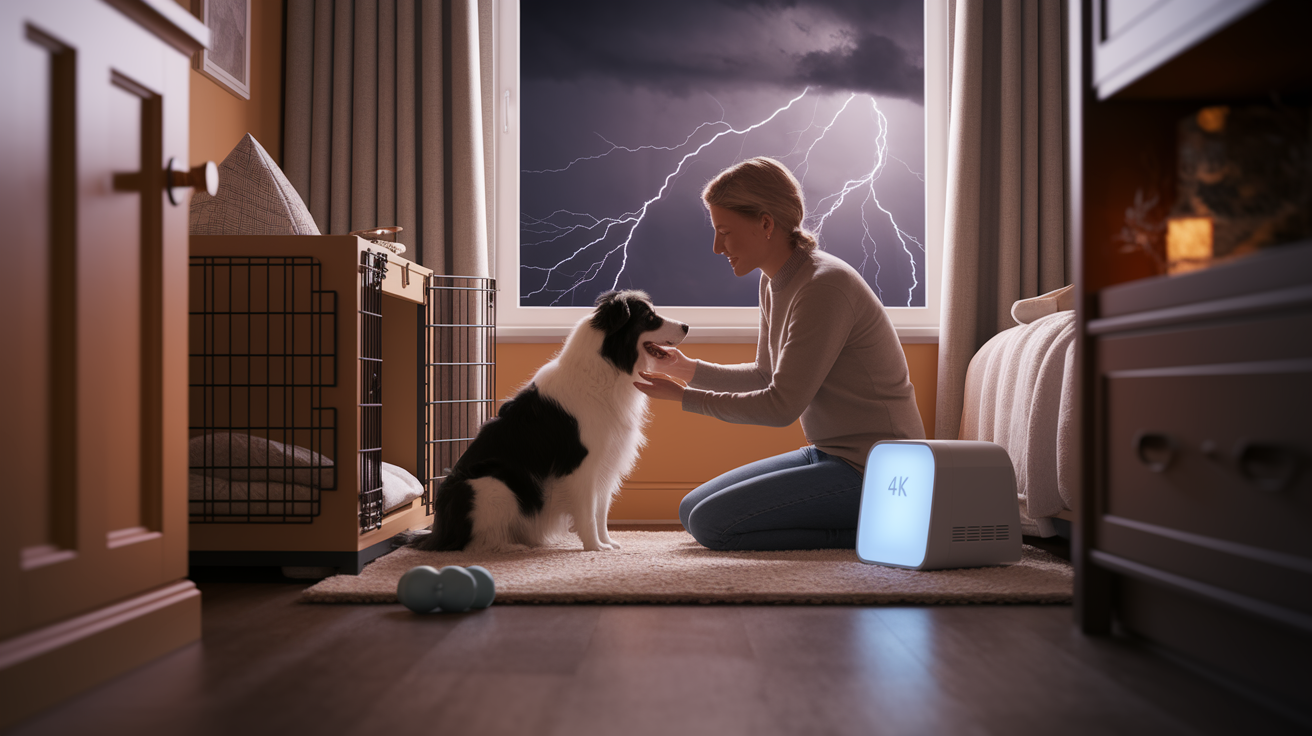
Dogs don’t experience storms the way we do. They’re picking up thunder from miles out, long before you’ve noticed the clouds rolling in. It’s not just about the noise. They can sense pressure drops in the atmosphere, detect electrical charges building up, and feel that uncomfortable static prickle in their fur. All of this floods their system with a survival instinct that says “find shelter, stay alert.” When the noise kicks in and nowhere feels safe enough, that instinct turns into full panic.
Your job is to stay calm and act like their anchor. Dogs read everything about you, from how you’re standing to the tone in your voice. Speaking softly and moving slowly actually helps them settle their own nervous system. The second you notice storm signs (whether that’s your dog pacing or the first distant rumble), start your calming routine. Don’t wait for full panic mode. Catching it early can stop the anxiety from escalating into destructive behavior or dangerous escape attempts.
Here’s what to do the moment a storm begins:
- Get your dog to a small, enclosed space. A covered crate works, or an interior bathroom, or even a closet. Somewhere with fewer windows and less outside noise.
- Turn on white noise, a fan, or calming music at a steady volume. You’re masking those unpredictable bangs of thunder.
- Close the curtains or blinds so lightning flashes don’t startle them.
- Offer something they can focus on. A long-lasting chew, a frozen KONG stuffed with peanut butter, or a lick mat smeared with cream cheese.
- If they want contact, pet them in long, slow strokes along their back and sides. If they’d rather have space, just sit nearby without forcing anything.
- Talk to them in a low, steady voice. Ask for a simple cue like “sit” or “down” and reward it with a treat. You’re redirecting their focus back to you and away from the storm.
Recognizable Signs and Symptoms of Storm Anxiety in Dogs
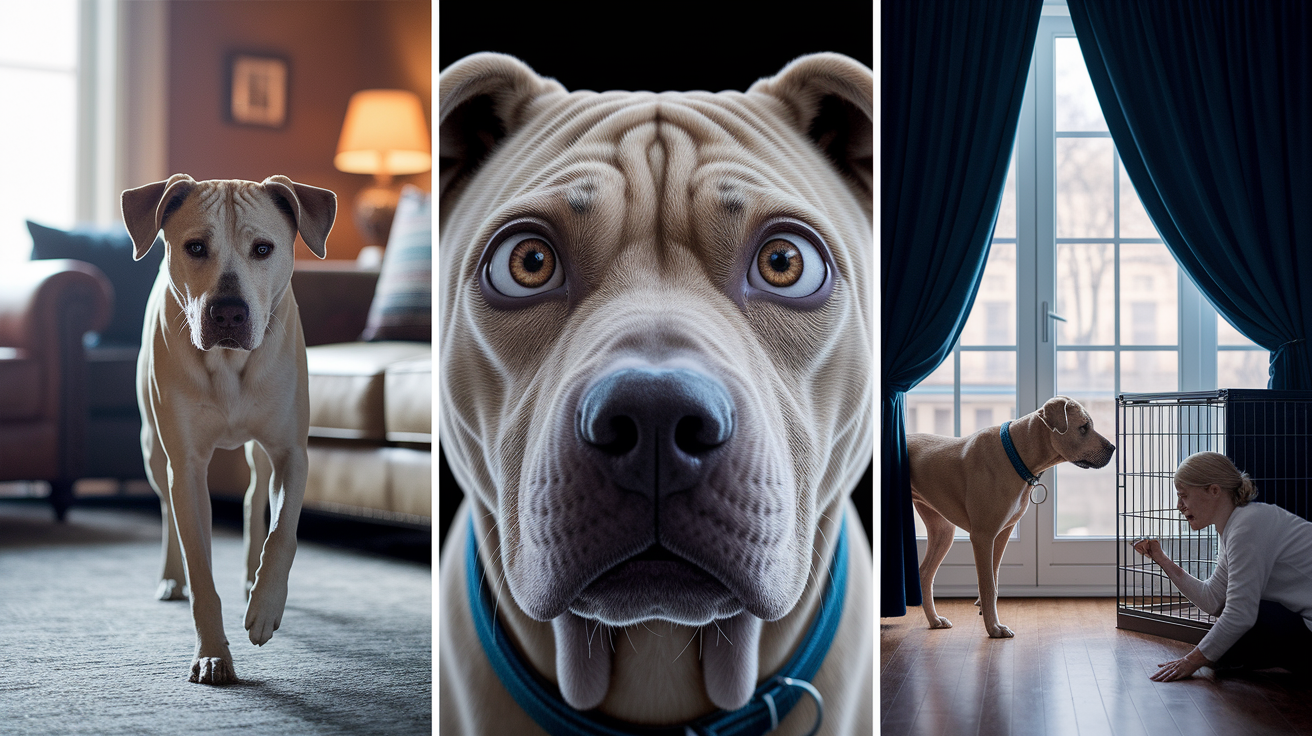
Storm anxiety shows up three ways. Behavior shifts, physical stress you can see, and changes in how your dog interacts with their space. Behavioral signs usually come first. Pacing in tight circles. Trying to hide under furniture or in closets. Whining or barking that sounds higher-pitched than normal. Clinginess where they follow you everywhere or paw at your legs.
Physical symptoms are harder to miss once they start. Trembling or full-body shaking. Heavy panting even when it’s not warm. Drooling more than usual. Wide eyes where you can see the whites. Ears pinned flat. Some dogs will also urinate or defecate indoors during a storm, even if they’re totally housetrained. Fear overrides their usual bathroom control.
The environmental cues tell you how bad it’s getting. Dogs with moderate fear might refuse to go outside once they sense a storm coming. Severe cases involve destructive behavior like scratching at doors, chewing baseboards or window frames, frantic digging at carpet near exits. A few dogs will hurt themselves trying to escape through windows or crates. If your dog suddenly starts acting anxious before storms when they never did before, or if the fear seems to get worse fast, consider underlying medical issues. Pain, cognitive changes, or hearing loss can all amplify stress responses.
Environmental Adjustments That Reduce Anxiety
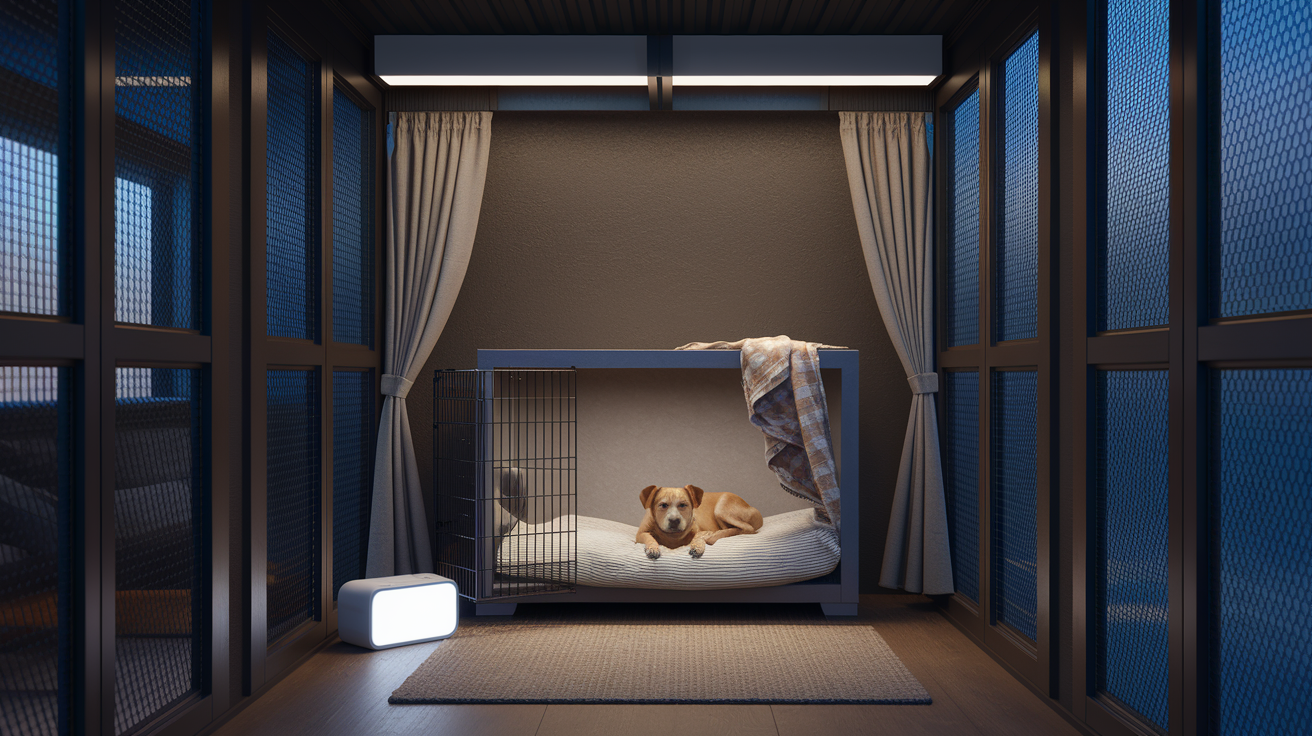
Creating a storm-safe zone at home gives your dog a predictable place where the sensory overload gets dialed way down. You’re trying to reduce what they can see, hear, and feel from the storm. An interior room with few or no windows works best. Basements are naturally insulated and quiet. If you don’t have a basement, try a bathroom, walk-in closet, or laundry room. Set up the space before storm season starts so your dog already knows it as a comfortable spot, not just a place they get sent when scared.
Sound and light control make the biggest difference. Thunder is unpredictable, and that’s scarier to dogs than steady noise. White-noise machines, box fans, or playlists of calming music (classical or soft instrumental tracks) create a consistent audio blanket that makes sudden crashes less jarring. Blackout curtains or heavy blankets over windows keep lightning flashes from startling them. If your dog uses a crate, covering three sides with a thick blanket turns it into a cozy den and cuts down on visual stimulation while still letting air flow.
Stock your dog’s safe zone with these four things:
- A properly sized crate (about 1.5 times your dog’s body length) with soft bedding and a familiar blanket that smells like home.
- A white-noise machine or portable speaker playing steady background sound at 60 to 70 decibels.
- Blackout curtains, shades, or clip-on blackout fabric for any windows in the room.
- A basket of high-value chews, puzzle toys, and interactive feeders to keep your dog’s mind busy during the storm.
Long-Term Conditioning and Desensitization Methods
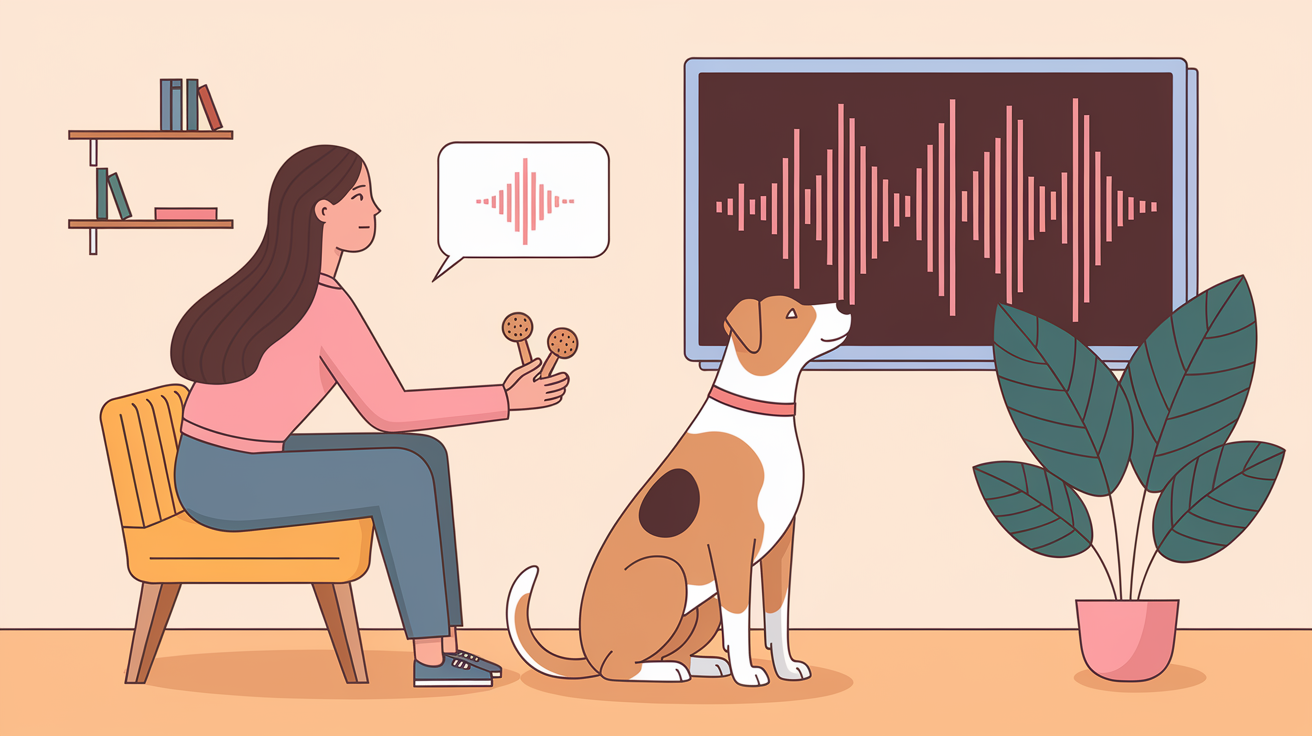
Desensitization works by gradually teaching your dog that storm sounds predict calm, positive experiences instead of danger. This takes weeks to months and requires consistency, but it’s one of the most effective long-term solutions. You’ll start with very low-volume recordings of thunder, rain, and wind. Play them for just five to ten minutes while your dog is relaxed and doing something enjoyable, like eating a meal or playing with a favorite toy.
The key is pairing the sound with something your dog loves every single time. Play a two-second snippet of quiet thunder, immediately give a high-value treat (small pieces of chicken, cheese, or freeze-dried liver), then stop the sound. Repeat this ten to fifteen times in a session. Your dog should stay calm and curious, not tense. If you see any stress signs (ears back, licking lips, turning away), the volume’s too high or the session’s too long. Drop back to an easier level and rebuild slowly. Progress happens in tiny steps. Increase the volume by only five to ten percent every few days, and only if your dog shows calm behavior in at least eight or nine out of ten tries.
Counterconditioning goes hand-in-hand with desensitization but focuses on changing your dog’s emotional response, not just their tolerance. You’re creating a new association where “storm sounds equal great things happening.” Between desensitization sessions, watch real weather forecasts and start your routine early. The moment the sky darkens or the barometric pressure drops (many dogs react before the first thunder), begin offering treats, games, or a special toy your dog only gets during storms. Over time, your dog will start to anticipate good experiences when a storm rolls in instead of bracing for fear. Realistic expectations matter. Mild cases may improve noticeably in four to eight weeks. Moderate anxiety often takes two to three months. Severe phobias may need six months or more of consistent work combined with other interventions like calming products or medication.
Helpful Calming Aids and Products

Several categories of products can support your at-home calming plan and make storms more manageable. Pressure wraps and anxiety vests like the ThunderShirt apply gentle, constant pressure around your dog’s chest and torso, similar to swaddling a baby. Many dogs visibly relax within five to ten minutes of wearing one. The wrap should fit snugly but not restrict breathing or movement. Put it on your dog five to ten minutes before a storm starts if possible, or as soon as you notice early anxiety signs. Some dogs tolerate wraps better if you introduce them during calm moments first, pairing the vest with treats and playtime so it becomes a positive cue.
Supplements and pheromones offer a gentler, non-prescription option for dogs with mild to moderate anxiety. Products containing L-theanine, thiamine, chamomile, or proprietary calming blends (like Zylkene or Solliquin) can take the edge off stress when given thirty to sixty minutes before an expected storm. Dog-appeasing pheromone diffusers, collars, or sprays release synthetic versions of calming scents that mimic the pheromones mother dogs produce for their puppies. Typical diffuser kits cost twenty-five to fifty dollars and cover about 650 square feet. Refills run fifteen to twenty-five dollars and last about a month. Always talk to your veterinarian before starting any supplement to confirm it’s safe for your dog’s age, size, and health status, and to verify proper dosing.
| Product Type | Benefit | Typical Use Case |
|---|---|---|
| Pressure wrap or anxiety vest | Applies calming compression; reduces trembling and pacing | Dogs with moderate fear who respond well to physical comfort |
| Pheromone diffuser or spray | Releases calming scent signals; lowers overall stress in the environment | Multi-dog households or dogs who stay in one room during storms |
| Calming supplement (chews or tablets) | Ingredients like L-theanine or chamomile ease nervous system activity | Dogs with predictable storm anxiety when you can dose 30 to 60 minutes ahead |
| White-noise machine or sound masker | Masks unpredictable thunder with steady background noise | Any dog sensitive to sudden loud sounds; also helpful for fireworks fear |
When Professional Help or Medication Is Necessary
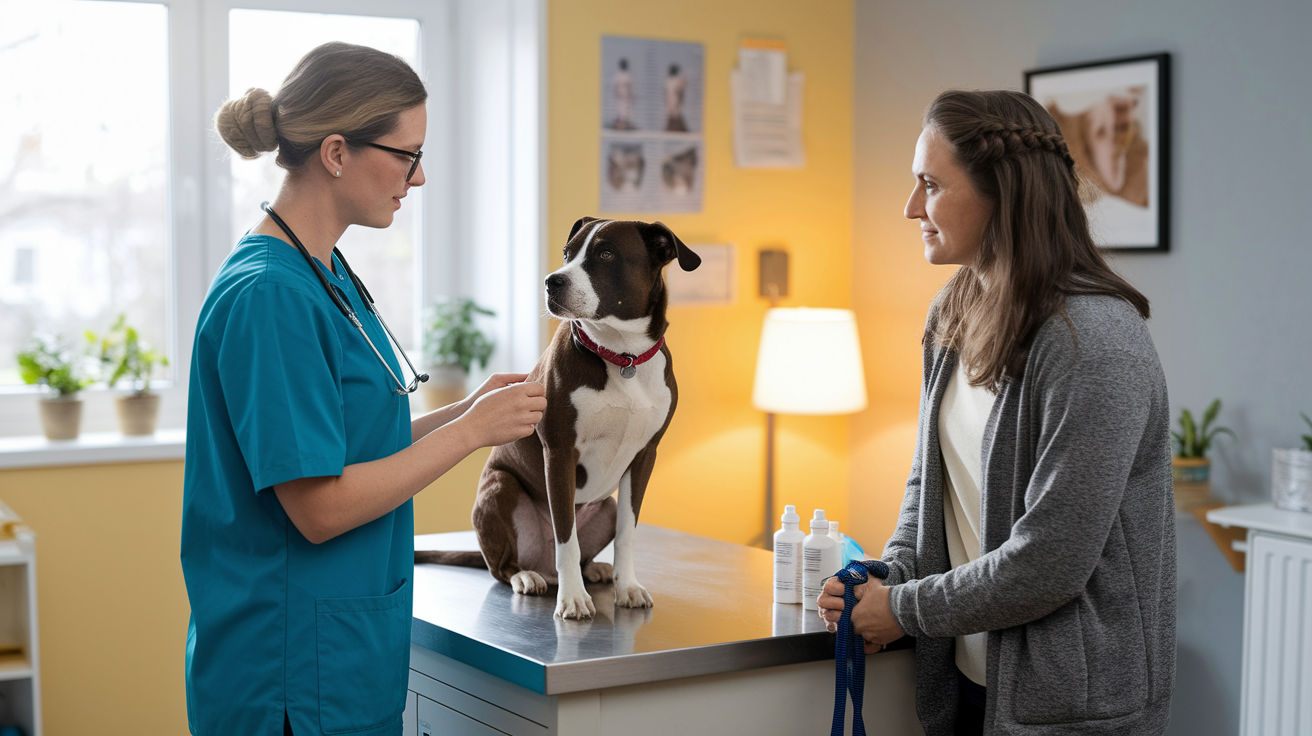
Some dogs experience storm anxiety severe enough that at-home strategies alone aren’t sufficient. Red flags include self-injury from escape attempts (broken teeth, torn claws, cuts from breaking through windows or screens), aggression toward people or other pets during storms, prolonged panic lasting hours after the storm ends, or complete inability to function (refusal to eat, drink, or move for extended periods). If your dog’s anxiety leads to dangerous behavior, causes significant destruction, or shows no improvement after eight to twelve weeks of consistent environmental changes and behavior modification, it’s time to involve your veterinarian or a veterinary behaviorist.
Prescription medications become appropriate when a dog’s stress response is so intense that they can’t learn or calm down enough to benefit from training. Fast-acting options like benzodiazepines (for example, alprazolam) or trazodone can be given thirty to ninety minutes before an expected storm to take the edge off acute panic. These work well for situational anxiety when you can anticipate storms via weather apps or forecasts. For dogs with frequent, severe phobias or anxiety that persists across multiple triggers, long-term medications such as selective serotonin reuptake inhibitors (SSRIs like fluoxetine) may be recommended. These require daily dosing and typically take four to six weeks to show full effect. Your veterinarian will assess your dog’s overall health, run any necessary lab work, and design a medication plan tailored to your dog’s specific anxiety pattern, age, and medical history. Combining medication with ongoing behavior modification and environmental management gives the best long-term outcome for dogs with serious storm phobias.
Final Words
Start by using quick calming steps like a den-like space, soft sounds, gentle reassurance, and reducing flashes and noise, then watch for fast improvement. This post covered immediate actions, how to spot storm anxiety, environment fixes, long-term desensitization, calming products, and when to get professional help.
Tonight, try two or three immediate tips and note what changes. Call your vet if your dog is pacing nonstop, injures themselves, or doesn’t settle.
With steady practice and small wins, managing dog anxiety during thunderstorms gets easier.
FAQ
Q: How to calm an anxious dog during a thunderstorm?
A: To calm an anxious dog during a thunderstorm, move them to a den-like room, play masking sounds, offer a pressure wrap or blanket, give gentle reassurance, dim lights, and avoid forcing attention.
Q: Why is my dog randomly scared of thunderstorms?
A: Your dog is likely scared of thunderstorms because loud noise sensitivity, static electricity, and pressure changes can trigger fear; past bad experiences or genetic temperament can make reactions start suddenly.
Q: How to stop thunderstorm anxiety and desensitize a dog to thunder?
A: To stop thunderstorm anxiety and desensitize your dog, do gradual exposure with recorded thunder at low volume paired with treats, teach coping cues, be consistent over weeks, and ask your vet if progress stalls.
