
Think the pretty picture on the bag means the food is high quality?
Most owners do, but the real story lives in the small print on the back and sides.
Three things matter most: the ingredient list, the AAFCO nutritional adequacy statement, and the guaranteed analysis.
This guide shows you how to read those lines, spot confusing terms and marketing tricks, and pick food that matches your dog’s life stage, weight, and activity.
You’ll walk away with simple label checks and clear next steps.
How to Read a Dog Food Label (Start Here)

Learning to read a dog food label correctly helps you make smarter decisions about what you’re feeding every day. Most owners glance at the front of the bag and assume a colorful picture means quality, but the real information sits on the back and sides in small print. Three pieces of data matter most: the ingredient list, the AAFCO nutritional adequacy statement, and the guaranteed analysis. These three tell you what’s inside, whether it’s complete nutrition for your dog’s life stage, and how much protein, fat, fiber, and moisture the food contains.
Ingredients appear in descending order by weight before processing. That means the first ingredient on the list makes up the largest portion of the food by weight when it went into the recipe. If you see “chicken” listed first, chicken was the heaviest single ingredient. Fresh meats contain a lot of water (around 70 to 75 percent), so they rank high on the list even though they shrink during cooking. A food listing “chicken meal” lower down may actually deliver more concentrated protein than the fresh chicken at the top once you account for water loss.
The AAFCO nutritional adequacy statement is a short sentence that tells you whether the food is complete and balanced for a specific life stage. Look for wording like “formulated to meet the nutritional levels established by the AAFCO Dog Food Nutrient Profiles for adult maintenance” or “animal feeding tests using AAFCO procedures substantiate that this food provides complete and balanced nutrition for growth.” If you don’t see an AAFCO statement, the food isn’t intended as a sole diet.
The guaranteed analysis lists the minimum percentages of crude protein and crude fat, plus the maximum percentages of crude fiber and moisture. Here’s what those numbers mean at a glance:
Crude protein (min): Shows the lowest protein percentage you’ll find in any bag from that batch.
Crude fat (min): Indicates minimum fat content, which supplies energy and helps absorb vitamins.
Crude fiber (max): Tells you the upper limit of indigestible plant material that helps with digestion.
Moisture (max): Reveals water content, which affects shelf life and nutrient concentration.
Understanding Ingredient Definitions and Categories

Ingredient names follow strict definitions, but the wording can be confusing if you don’t know what each term really means. “Chicken” on a label refers to clean flesh from chickens, with or without bone, and it includes the natural moisture found in raw meat. “Chicken meal” is chicken that’s been rendered (cooked down to remove water and fat) and ground into a dry protein powder. Because meal has already lost most of its water, it’s far more concentrated. One pound of chicken meal contains roughly three to four times the protein of one pound of fresh chicken.
“By-products” often worry owners, but the term itself isn’t automatically bad. Chicken by-product meal can include organ meats like liver, kidneys, lungs, and cleaned intestines. All nutrient-dense, all commonly eaten in many human cuisines around the world. The concern arises when a label simply says “meat by-products” or “animal by-products” without naming the species. Vague wording makes it impossible to know what you’re feeding and whether the source is consistent batch to batch. If you see “chicken by-product meal,” you know it came from chickens. If you see “poultry by-product meal,” you know it came from poultry but not which kind. Specificity matters.
Whole ingredients like sweet potatoes, peas, or blueberries sound appealing, but remember they’re listed by weight with all their water included. A whole sweet potato is about 75 percent water. Once the food is cooked and dried into kibble, that sweet potato shrinks dramatically and may contribute far less to the final recipe than you’d guess from its position on the ingredient list. Meals and other pre-dried ingredients give you a clearer picture of what’s actually in the bowl after processing.
Here are the most common ingredient terms decoded:
Chicken (or beef, lamb, etc.): Fresh meat with natural moisture, listed by raw weight.
Chicken meal: Rendered, concentrated protein source with most fat and water removed.
Chicken by-product meal: Ground, rendered organs and other edible parts from chickens. Nutrient-rich if from a named species.
Meat meal (unnamed): Rendered protein from unspecified animals. Raises transparency concerns.
Animal digest: Liquid flavoring made by breaking down animal tissue. Palatability enhancer, not a primary protein source.
Decoding Marketing Terms and Packaging Claims
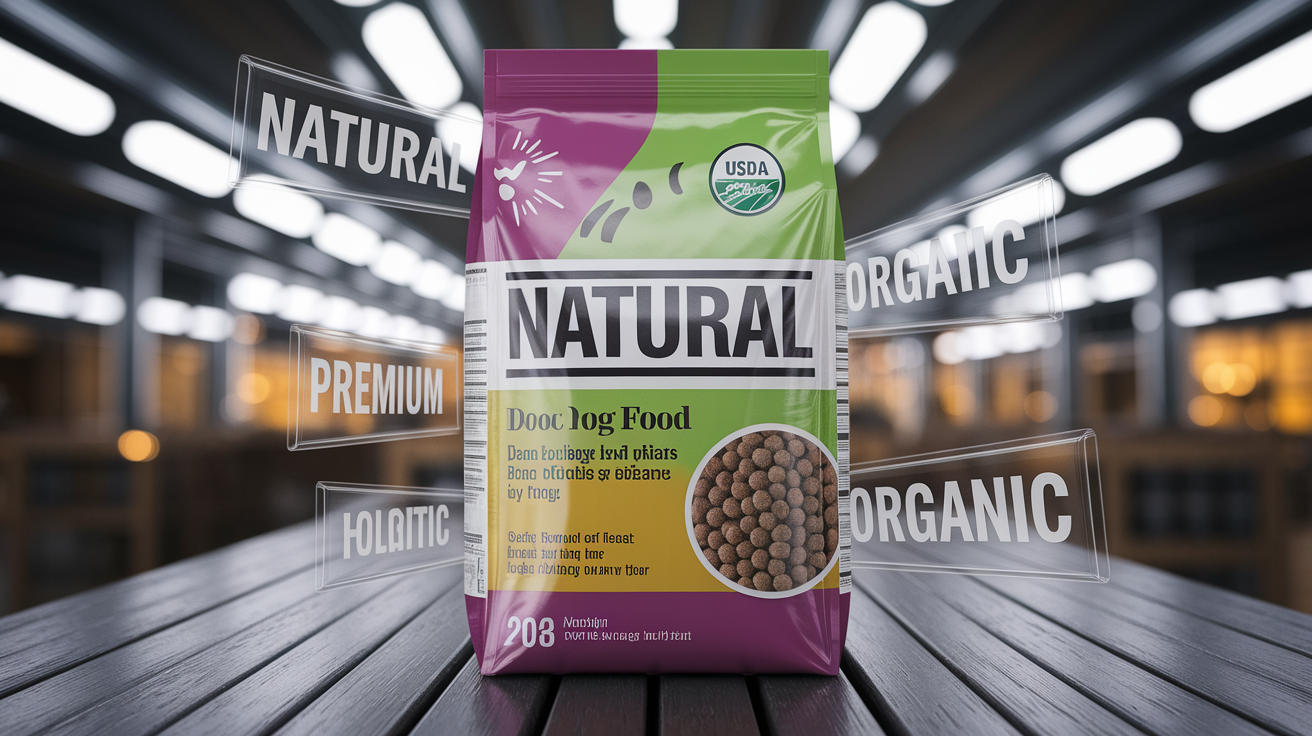
Words like “natural,” “premium,” and “holistic” show up on nearly every bag, but most of them carry no regulatory weight. “Natural” generally means the food contains no artificial flavors, colors, or preservatives, but it doesn’t promise organic sourcing, higher protein, or better digestibility. You can have a “natural” food with low-quality fillers and a “conventional” food with superior ingredients. The term sounds reassuring without guaranteeing much.
“Premium,” “super premium,” and “gourmet” are pure marketing. There’s no legal standard for these words in pet food. A brand can call itself premium even if the ingredient list is dominated by corn and unnamed meat meals. “Holistic” falls into the same category. It suggests balance and whole-body health, but AAFCO and the FDA don’t define or regulate it. If a bag says “holistic,” check the ingredient list and guaranteed analysis to see if the food actually matches the claim.
“Organic” is different. Organic pet food must follow USDA National Organic Program rules, which means no synthetic fertilizers, pesticides, antibiotics, or growth hormones in the ingredients, and stricter handling requirements during manufacturing. If you see the USDA organic seal, the food met those standards. That doesn’t automatically make it more nutritious or safer than high-quality conventional food, but it does mean verifiable sourcing and production practices.
“Grain-free” became a trend, but there’s limited veterinary evidence that grain-free diets are healthier for most dogs. Grains like rice, oats, and barley are digestible carbohydrate sources that many dogs handle well. The FDA has been reviewing a possible link between certain grain-free diets (especially those high in peas, lentils, and potatoes) and dilated cardiomyopathy (DCM) in some breeds. Grain-free isn’t inherently bad, but it’s not a guarantee of better nutrition either. Talk to your vet before choosing grain-free if your dog doesn’t have a diagnosed grain sensitivity.
Interpreting Feeding Guidelines and Calorie Information
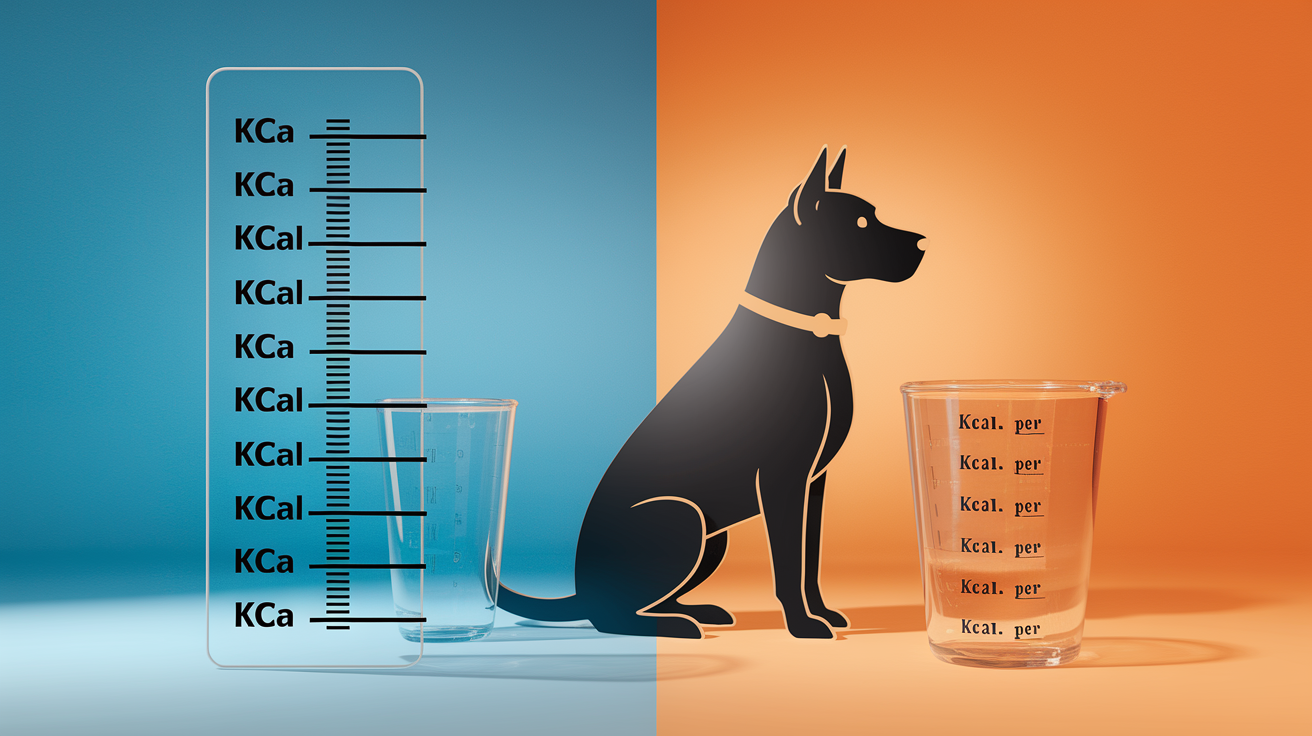
The feeding guide printed on every bag or can gives you a starting point, not a final answer. Those charts typically list cup or gram amounts based on your dog’s current weight, assuming average activity and a healthy metabolism. A 30-pound dog might see a recommendation of 1½ to 2 cups per day, but that range can vary widely depending on whether your dog is a couch napper or a high-energy working breed. The guide also doesn’t account for age, whether your dog is spayed or neutered, or the temperature of your climate.
Calorie content appears as kcal per kilogram and kcal per cup (or per can for wet food). Kilocalories (kcal) are what we commonly call “calories” in everyday conversation. A typical dry kibble might list 3,500 kcal/kg, which works out to about 350 kcal per cup if one cup weighs roughly 100 grams. Wet food is much less energy-dense because of high moisture, often around 800 to 1,000 kcal/kg, or 80 to 100 kcal per 100-gram serving. Use these numbers to calculate how much food delivers the daily calories your dog actually needs, not just the generic cup amount on the chart.
Most owners pour kibble into a measuring cup without checking the cup’s accuracy or weighing the food. Kibble shapes and densities vary, so “one cup” of a small, dense kibble can weigh twice as much as “one cup” of a large, airy kibble. If you’re managing weight or dealing with a picky eater, a kitchen scale gives you exact portions. Weigh out the grams that match your dog’s calorie target and adjust every few weeks based on body condition.
Factors that change your dog’s calorie needs include:
Activity level: Working dogs, agility competitors, and puppies burn far more energy than seniors or less active pets.
Spay or neuter status: Altered dogs often need 10 to 20 percent fewer calories than intact dogs of the same size.
Age and metabolism: Puppies and young adults need more calories per pound. Senior dogs and dogs with certain health conditions may need fewer.
Red Flags to Watch for on Dog Food Labels

Some label details signal lower quality or reduced transparency. Vague ingredient names make it hard to know what your dog is eating and whether the formula stays consistent. “Meat meal” without a species (chicken, beef, lamb) means the protein could come from any combination of animals and change from batch to batch. “Animal digest” is a flavoring spray made by chemically breaking down animal tissue. It’s not harmful in small amounts, but if it’s listed in the first five ingredients, the food is relying on flavor enhancers instead of real meat.
Artificial colors like Red 40, Yellow 5, and Blue 2 serve no nutritional purpose. Dogs don’t care whether their kibble is brown or rainbow-colored. Those dyes exist to appeal to human buyers. Some dogs may be sensitive to certain synthetic colors, and while they’re approved for use, many owners prefer to avoid them entirely. If you see a list of color additives on the label, ask yourself whether the food is designed for your dog’s health or your perception of freshness.
Watch for these red flags when comparing labels:
Unnamed protein sources like “meat,” “meat meal,” or “animal by-products” instead of “chicken meal” or “beef.”
Missing or vague AAFCO statement such as “intended for intermittent feeding only” or no life-stage designation.
High sugar or corn syrup content in wet foods, used to improve palatability but adding empty calories.
Ingredient list dominated by fillers like corn, wheat middlings, or soybean hulls in the first three spots with little named meat.
No calorie (kcal) information on the package, making it impossible to calculate proper portions.
Excessive preservatives like BHA, BHT, or ethoxyquin if you prefer to avoid synthetic antioxidants. Natural preservatives like mixed tocopherols (vitamin E) are common alternatives.
Comparing Two Dog Food Labels: A Practical Walkthrough
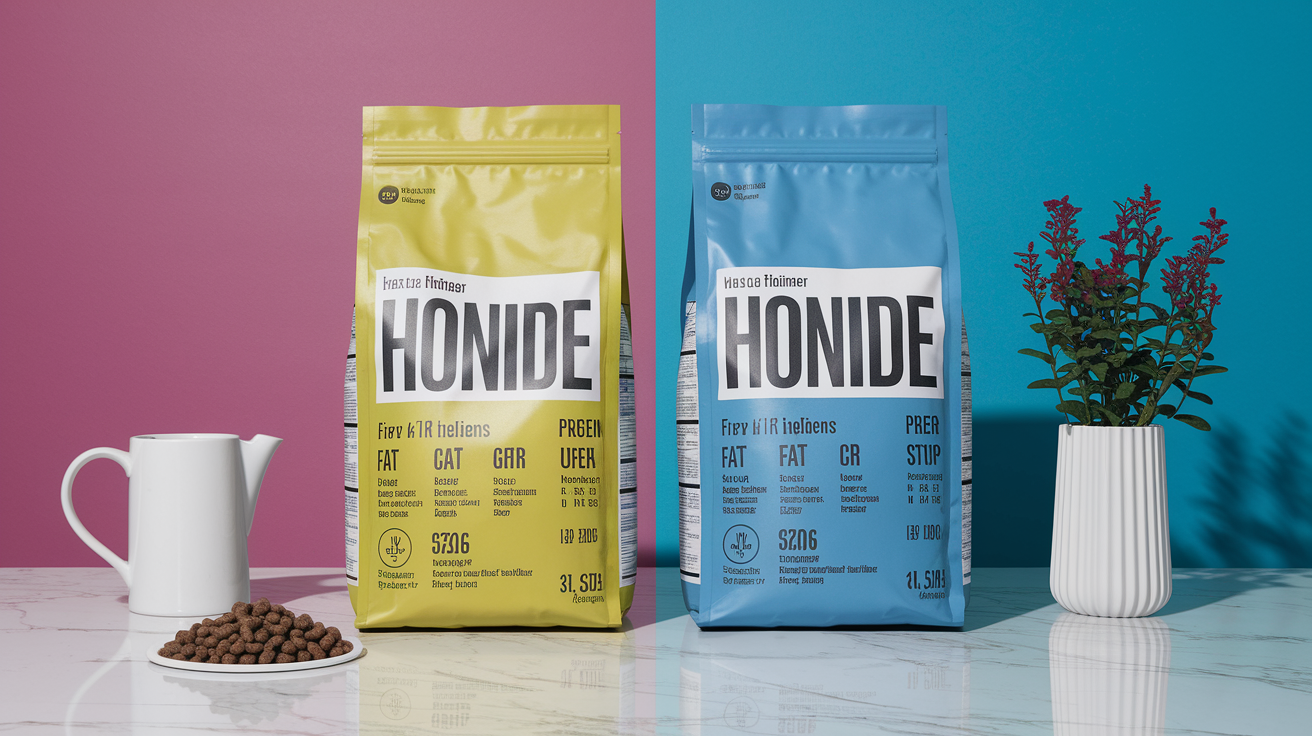
Seeing two labels side by side shows you how much variation exists even among foods that look similar on the front of the bag. The example below compares a mid-range adult kibble and a higher-protein formula, both for adult maintenance. Pay attention to ingredient order, moisture content, and the guaranteed analysis percentages to understand what each food actually delivers once it’s in the bowl.
| Formula | Ingredient Order (first 5) | Key Nutrient Highlights |
|---|---|---|
| Formula A (standard adult) | Chicken, chicken meal, brown rice, oatmeal, chicken fat | Protein 22% (min), Fat 12% (min), Fiber 4% (max), Moisture 10% (max). Calorie content: 3,400 kcal/kg (340 kcal/cup). |
| Formula B (high-protein adult) | Chicken meal, chicken, peas, chicken fat, flaxseed | Protein 32% (min), Fat 16% (min), Fiber 5% (max), Moisture 10% (max). Calorie content: 3,800 kcal/kg (380 kcal/cup). |
Formula A lists fresh chicken first, but chicken meal appears second, meaning the food contains both fresh and concentrated protein. Brown rice and oatmeal follow, adding digestible carbohydrates. The guaranteed analysis shows 22 percent protein on the label, which converts to about 24 percent protein on a dry-matter basis once you remove the 10 percent moisture. This is a moderate-protein option suitable for less active adult dogs or those who gain weight easily. The calorie density is also moderate at 340 kcal per cup, so portion sizes will be slightly larger than a more energy-dense food.
Formula B starts with chicken meal, the most concentrated protein source, followed by fresh chicken and then peas. Peas add plant protein and carbohydrates, but they also contribute to the higher fiber percentage. At 32 percent protein (about 36 percent dry-matter basis), this food delivers significantly more protein per cup, which benefits active dogs, working breeds, or dogs who need to maintain muscle mass. The fat content is also higher at 16 percent, boosting energy density to 380 kcal per cup. That means you’ll feed smaller portions than Formula A to deliver the same daily calories, and your dog will feel fuller on less volume if the protein and fat are well-digested. The trade-off is cost. Higher-protein formulas usually cost more per pound, but you feed less, so compare cost per 1,000 kcal to see the real value.
Final Words
Check the ingredient list, the AAFCO adequacy statement, and the guaranteed analysis before you buy. Those three items tell you most of what matters right away.
We also explained what terms like meal, by-products, and organic mean, how feeding guides and calories are listed, and the label red flags to avoid.
Use the comparison walkthrough to practice with real packs, take notes or photos, and ask your vet if you’re unsure. With practice you’ll know how to read dog food labels correctly and shop with confidence.
FAQ
Q: How do you read a dog food label?
A: Reading a dog food label starts with three things: ingredient order (by weight), the AAFCO nutritional adequacy statement (complete/balanced or life stage), and the guaranteed analysis (protein, fat, fiber, moisture).
Q: What is the 25 rule for pet food?
A: The 25 rule for pet food means a product labeled “dinner” or “entree” must contain at least 25 percent of the named ingredient by weight.
Q: What are three common mistakes people make when reading a food label?
A: Three common mistakes people make when reading a food label are assuming marketing claims equal quality, misreading ingredient order (water boosts whole-meat weight), and ignoring guaranteed analysis and calorie info.
Q: Why do vets hate grain free?
A: Vets dislike grain-free diets because they’ve been linked to some cases of dilated cardiomyopathy (DCM) in dogs and often use legumes or potatoes that can alter nutrient balance.
