
What if your dog truly panics every time you walk out the door?
If your dog barks, chews near exits, paces nonstop, or has accidents within minutes of your leaving, those are panic signals and you need a plan.
This post gives clear, step-by-step training techniques that actually work: quick fixes to try tonight, a gradual departure schedule, calming changes at home, and enrichment ideas to keep your dog busy.
You’ll also learn what to watch for and when to seek professional help.
Immediate Actions to Start Reducing Dog Separation Anxiety Today
If your dog’s barking within minutes of you walking out, destroying stuff near the door, pacing nonstop, or having accidents despite being housetrained, you need to act now. Heavy drooling, trying to escape, scratching at exits… these aren’t just annoying behaviors. They’re panic signals.
Here’s what you can do right now, before your next departure:
- Keep exits and returns boring. Just leave. No dramatic goodbyes, no hugs, no “mommy will be right back” speeches. When you get home, ignore your dog until they’ve settled down.
- Give them a stuffed Kong or long-lasting chew only when you leave. Take it away when you’re back. You’re creating a positive link between your departure and something they actually want.
- Practice ridiculously short absences immediately. Step outside for 5 seconds. Come back. Reward calm behavior. Do this 10 to 20 times in one sitting.
- Tire them out before you go. 20 to 60 minutes of exercise right before departure, depending on your dog’s age and health. A worn-out dog settles easier.
- Never punish anxiety-driven behavior. Yelling at your dog for chewing the couch or peeing on the floor when they’re already terrified just makes everything worse.
These aren’t permanent fixes. Think of them as first aid while you build something more solid. They buy you breathing room and start teaching your dog that you leaving doesn’t mean the world’s ending.
Understanding Why Dog Separation Anxiety Develops

Separation anxiety isn’t your dog being stubborn or spiteful. It’s real panic, triggered by being left alone. Something in their world changed, or they never learned how to be comfortable by themselves in the first place.
Common triggers include household changes like moving, a new baby, losing a family member, or sudden schedule shifts. Rescue dogs and recently adopted dogs often struggle because of previous instability. Puppies who never experience alone time during their socialization window can develop problems later. Dogs who go from constant companionship to sudden long absences don’t adjust well. Some breeds are just naturally more anxious or tightly bonded. And under-stimulated, over-confined dogs can develop heightened distress.
Understanding the cause helps you fix the actual problem. A dog who was never trained to be alone needs gradual desensitization. A dog anxious after a move needs environmental stability and confidence-building. A rescue needs extra time and predictable routines to feel secure again.
Recognizing Separation Anxiety Signs and Differentiating Mild vs. Severe Cases
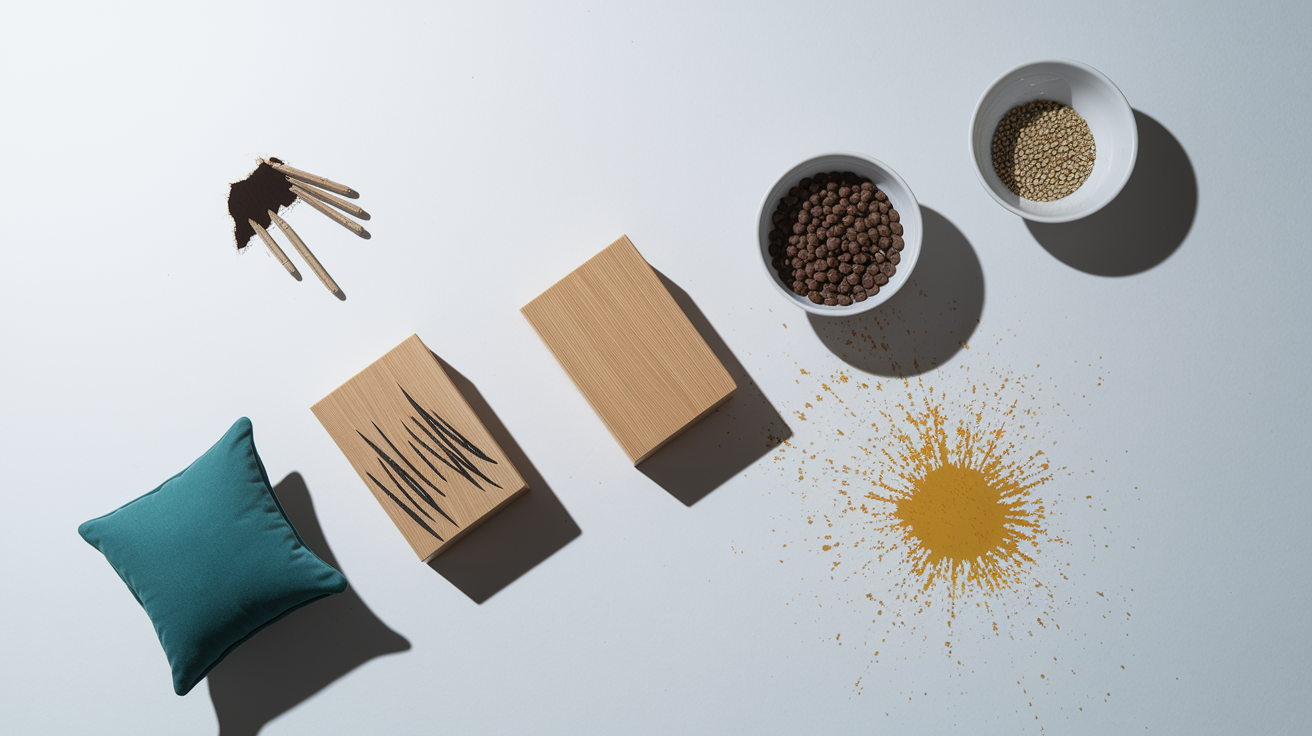
Watch for behaviors that start within minutes of leaving and continue or get worse while you’re gone. Barking or howling that lasts more than five minutes. Destructive chewing focused on doors and windows. Pacing. Excessive drooling. House soiling despite being housetrained. Refusing to eat. Escape attempts or self-injury.
Boredom looks different. A bored dog chews randomly or sleeps most of the day. An anxious dog panics the second you leave. It’s about timing and intensity. If the behavior starts right at departure and feels frantic, it’s anxiety.
Use this to gauge severity:
| Behavior | Typical Severity Indicator |
|---|---|
| Brief whining or mild pacing for a few minutes | Mild—often improves with short training |
| Vocalization lasting 10+ minutes, minor destruction | Moderate—requires structured plan |
| Prolonged barking/howling, repeated house soiling, escape attempts | Severe—consider veterinary evaluation |
| Self-injury, extreme destruction, total loss of appetite | Critical—seek immediate professional help |
Correctly identifying severity helps you pick the right level of intervention. Mild cases often respond to home training alone. Severe cases typically need medication plus behavior modification and professional guidance.
Core Training Methods to Reduce Separation Anxiety in Dogs

Desensitization Basics
Desensitization means exposing your dog to the thing that triggers their anxiety (your departure) in doses so small they stay calm. You start with absences so brief (5 to 10 seconds) there’s no time to panic. Over days and weeks, you increase duration by tiny increments, only moving forward when your dog stays relaxed. The goal is teaching your dog that leaving always results in returning, and being alone is safe and boring.
Counterconditioning With Positive Experiences
Counterconditioning pairs your departure with something your dog loves, changing their emotional response from fear to anticipation. Give a high-value treat or stuffed Kong only when you leave, and remove it when you return. Your dog starts associating your exit with something good. Repeat this pairing consistently so the positive experience happens every single time.
Reducing Triggering Departure Cues
Dogs pick up on pre-departure routines. Grabbing keys, putting on shoes, picking up your bag. These cues can trigger anxiety before you even leave. Reduce their power by practicing them without actually leaving. Put on your coat, pick up your keys, then sit back down and watch TV. Repeat this dozens of times until your dog stops reacting. When you do practice departures, vary the cues. Leave by different doors, wear different shoes, take different bags. Your dog can’t predict exactly when you’re leaving.
Common ways to desensitize departure cues:
- Pick up keys and set them down without leaving.
- Put on shoes and walk around the house.
- Open and close the door without stepping outside.
- Walk to your car and return immediately.
- Practice partial routines at random times throughout the day.
- Vary which door you use for practice exits.
Step-by-Step Departure Training Schedule for Anxious Dogs

Start with very short practice sessions multiple times per day. Each session should last 5 to 15 minutes and include many brief departures. Only increase duration when your dog completes three to five calm trials at the current level.
- Exit for 5 seconds. Step outside, count to five, return calmly. Reward your dog if they stayed calm. Repeat 10 to 20 times.
- Increase to 10 seconds. Repeat until your dog’s consistently calm.
- Move to 15 to 20 seconds. Keep practicing until stable.
- Advance to 30 seconds. Watch for distress. If your dog gets anxious, drop back to the last successful duration.
- Increase to 1 minute. Repeat multiple times across different sessions and days.
- Move to 2 minutes. Keep exits and returns low-key.
- Advance to 5 minutes. Vary departure cues now. Use different doors, different times of day.
- Increase to 10 minutes. Monitor with a camera or audio device if possible to confirm your dog’s staying calm.
- Move to 20 minutes. This is a common breakthrough point where many dogs start settling more easily.
- Gradually extend to 1 hour and beyond. Increase by roughly 10 to 20 percent each time your dog stays calm for multiple trials.
If your dog shows anxiety at any step, drop back to the previous duration and repeat for a few more days. Progress isn’t always linear. Some dogs move quickly through early steps and then plateau at 10 or 20 minutes. Be patient and adjust the schedule to your dog’s individual pace.
Creating a Calming Home Environment to Ease Dog Anxiety
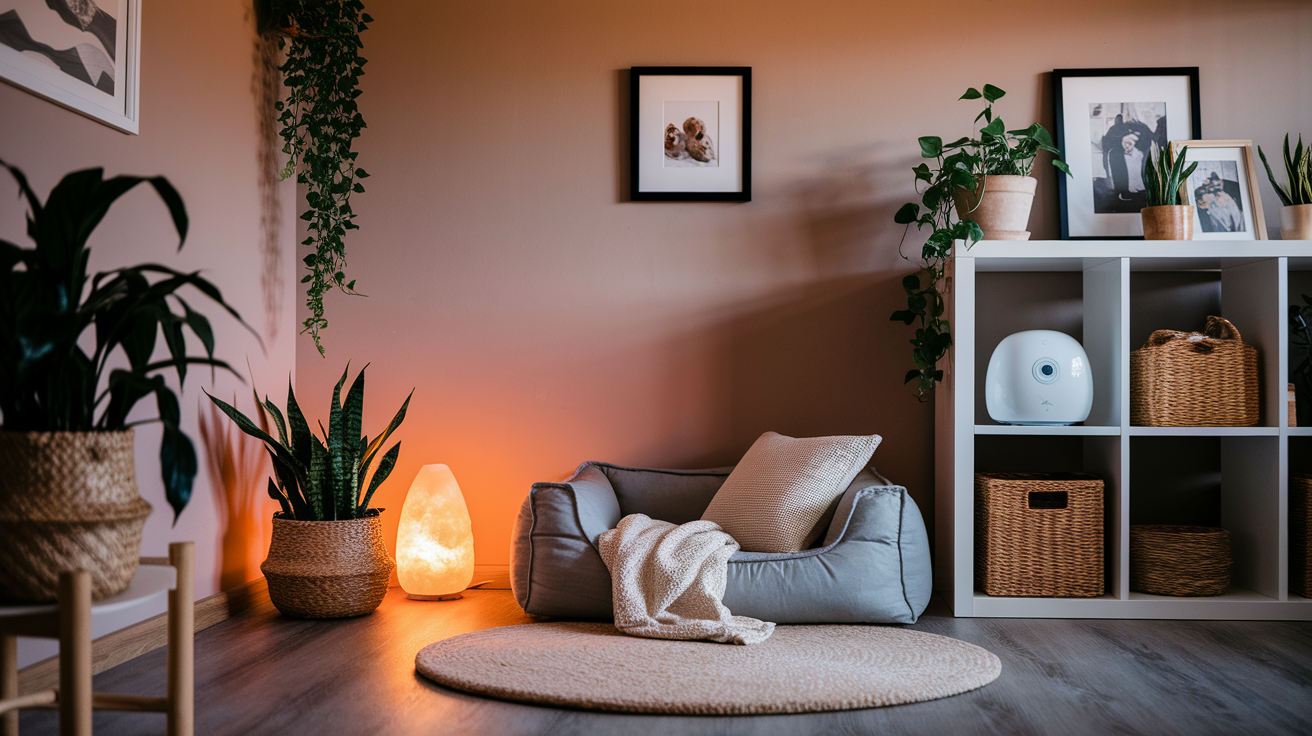
Your dog’s physical space matters. A predictable, comfortable environment reduces overall stress and makes alone time easier to tolerate. Designate a safe area where your dog feels secure. This can be a crate, a specific room, or a corner with their bed.
If you use a crate, make sure your dog already sees it as a positive den. Include a soft bed, a favorite toy, and a blanket with your scent. Never use the crate as punishment. If your dog panics in a crate, don’t force confinement. Some anxious dogs do better with more freedom of movement.
Environmental features that help reduce anxiety:
- Familiar bedding or an item with your scent (worn t-shirt, blanket).
- White noise, fan, or classical music to mask outside sounds.
- Puzzle toys or long-lasting chews available only during alone time.
- Dim lighting or blackout shades if your dog’s reactive to outdoor movement.
- A camera with two-way audio so you can monitor and occasionally speak to your dog without returning home.
Keep the space calm and consistent. Avoid rearranging furniture or changing routines suddenly during the training period.
Using Enrichment Toys and Mental Stimulation to Reduce Separation Anxiety
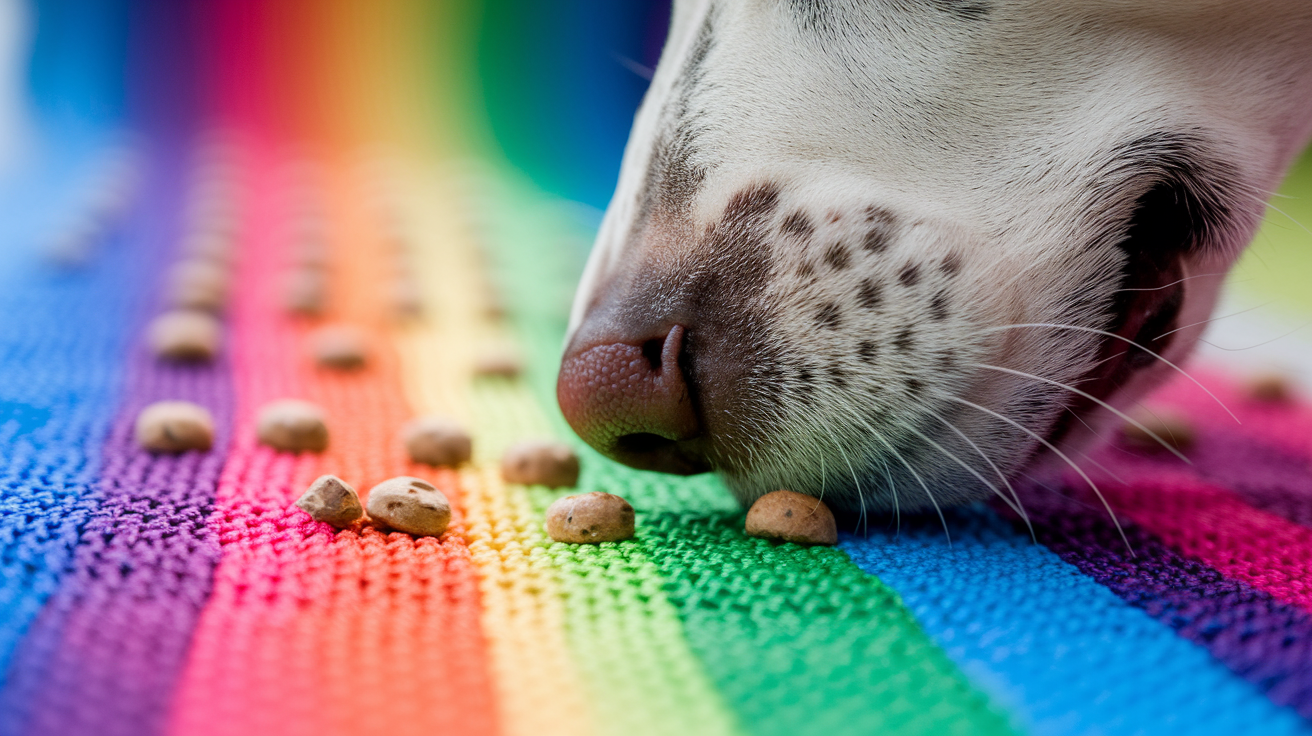
Mental work tires dogs almost as effectively as physical exercise. A dog engaged in problem-solving or scent work is less likely to focus on your absence. Rotate one to two high-value toys so they stay novel and interesting.
Stuffed Kongs are a common choice. Fill them with a mix of kibble, peanut butter, and canned food, then freeze for a longer-lasting challenge. A frozen Kong can occupy a dog for about an hour. Other enrichment options include puzzle feeders, snuffle mats, treat-dispensing balls, and hide-and-seek games with kibble scattered around the safe area.
| Toy/Activity | Calming Benefit |
|---|---|
| Frozen stuffed Kong | Provides 30–60 minutes of focused licking and chewing |
| Puzzle feeder (slow-release kibble) | Engages problem-solving and slows eating pace |
| Snuffle mat with scattered treats | Uses scent work to create cognitive fatigue |
| Durable chew toy (Nylabone, Benebone) | Satisfies chewing instinct and reduces stress |
| Rotating toy selection | Keeps novelty high and boredom low |
Offer these items only when you leave and remove them when you return. This creates a positive association with your departure. For working breeds or high-energy dogs, add scent games or new trick training during your time at home to build overall confidence and mental stamina.
Exercise, Routines, and Daily Habits That Reduce Dog Anxiety
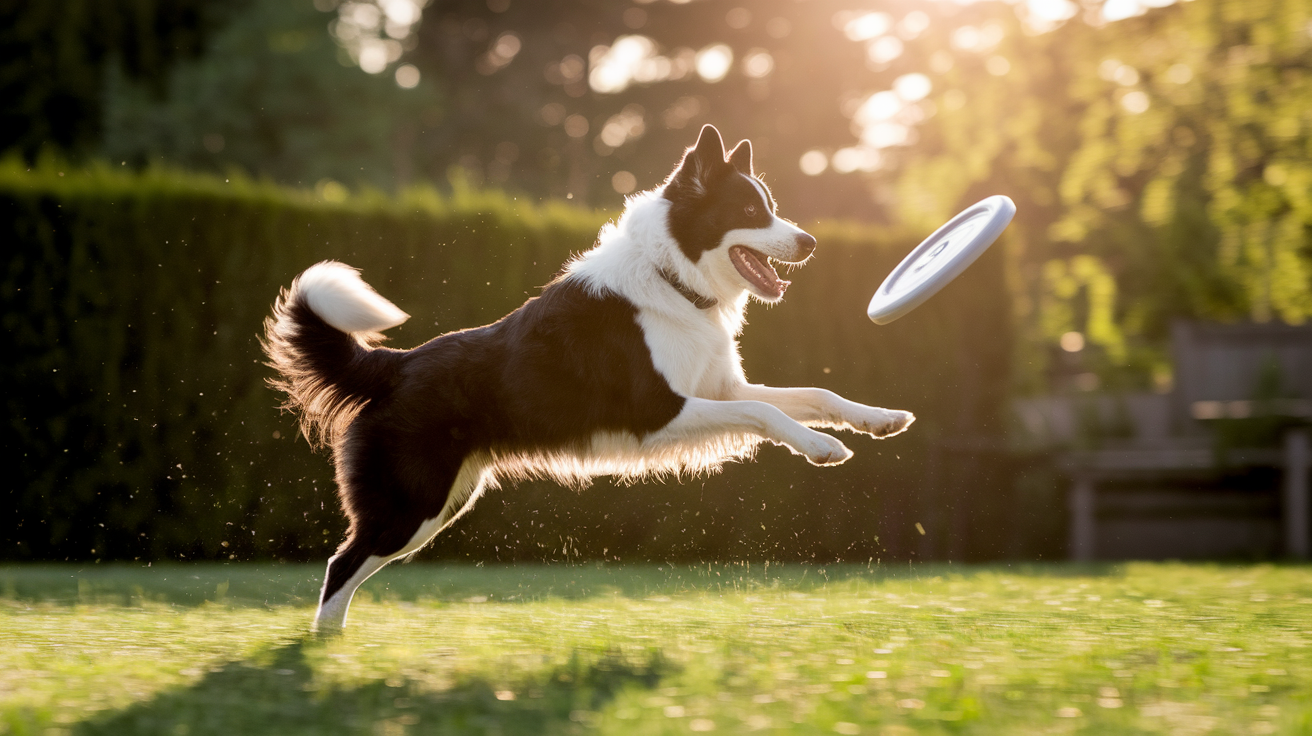
A tired dog is a calmer dog. Schedule 20 to 60 minutes of age-appropriate physical activity right before you leave. For young, healthy dogs, this might be a brisk walk, a game of fetch, or a run. For older or lower-energy dogs, a gentle walk and some sniffing time outdoors can be enough.
Predictable daily routines also reduce anticipatory stress. Feed meals at consistent times. Schedule walks, play sessions, and alone-time practice at roughly the same times each day. Dogs feel more secure when they know what to expect.
Additional daily habits that support calmer behavior:
- Morning exercise before the first departure of the day.
- Midday check-ins or dog-walker visits for long alone periods.
- Evening play or training sessions to reinforce bond and burn energy.
- Consistent low-key departure and return routines every single time you leave.
Avoid sudden schedule changes during the training period. If you must alter your routine, introduce the change gradually over several days so your dog can adjust without spiking anxiety.
Calming Aids: Supplements, Pheromones, and Anxiety Wraps

When training alone isn’t enough, safe calming aids can provide additional support. These aren’t cures, but they can lower your dog’s baseline anxiety enough to make behavior modification more effective.
Common over-the-counter supplements include L-theanine (an amino acid that promotes relaxation), alpha-casozepine (derived from milk protein), and melatonin (a natural sleep aid). Products like Zylkene and Rescue Remedy are also used by some owners. Always discuss dosing and safety with your veterinarian before starting any supplement, especially if your dog’s on other medications.
Pheromone diffusers and collars (such as Adaptil) release synthetic versions of calming pheromones that mimic the scent mother dogs produce while nursing. These can create a soothing atmosphere in your home and are safe for most dogs. Anxiety wraps, like the Thundershirt, apply gentle, constant pressure similar to swaddling a baby. Some dogs find this pressure calming during stressful moments.
Popular calming-aid categories:
- Oral supplements (L-theanine, alpha-casozepine, melatonin, L-Tryptophan).
- Pheromone products (diffusers, collars, sprays).
- Anxiety wraps and vests (Thundershirt, similar pressure garments).
- CBD oil or treats (must be vet-approved and THC-free).
- Aromatherapy (lavender, frankincense diffused in the home).
CBD’s increasingly popular but isn’t regulated consistently. Only use products specifically formulated for dogs, and consult your veterinarian about appropriate dosing and potential interactions with other treatments.
Veterinary Options and Medication Pathways for Severe Separation Anxiety

Severe separation anxiety often requires prescription medication combined with behavior modification. Medication doesn’t replace training. It lowers anxiety enough so your dog can learn new coping skills.
Common classes of medications include SSRIs (such as fluoxetine, which is Prozac for dogs), tricyclic antidepressants (such as clomipramine), trazodone (a short-acting sedative often used for situational anxiety), gabapentin (an anti-anxiety medication), and benzodiazepines (used sparingly for acute episodes). SSRIs and tricyclics typically take four to six weeks to show measurable benefit. Trazodone and gabapentin may work faster but are usually used in combination with longer-acting medications.
Your veterinarian will start with a thorough exam to rule out medical causes of distress, such as pain, gastrointestinal issues, or cognitive decline in older dogs. If anxiety’s confirmed, your vet will recommend a medication plan tailored to your dog’s symptoms, age, and overall health.
| Medication Type | Typical Use | Time to Effect |
|---|---|---|
| SSRI (fluoxetine) | Daily, long-term anxiety management | 4–6 weeks |
| Tricyclic (clomipramine) | Daily, long-term anxiety management | 4–6 weeks |
| Trazodone | Short-term situational use or adjunct therapy | 1–2 hours |
| Benzodiazepine | Acute episodes, used sparingly | 30–60 minutes |
Seek veterinary help immediately if your dog’s injuring themselves, showing extreme panic, or not improving after four to eight weeks of consistent home training. A veterinary behaviorist (a vet with specialized training in behavior) can provide advanced diagnostics and treatment plans for complex cases.
Expected Timelines, Progress Tracking, and Preventing Relapse
Progress takes time. Mild cases often show measurable improvement within two to six weeks of consistent daily training. Moderate cases may require six to twelve weeks. Severe cases can take several months and may need long-term medication and professional support.
Track your dog’s progress by recording how long they can tolerate being alone before showing signs of distress. Measure this weekly. Aim to increase the tolerated duration by roughly 10 to 20 percent only when your dog completes three to five calm trials at the current level.
Signs of improvement to watch for:
- Longer calm periods before vocalization starts.
- Reduced intensity of barking or whining.
- Less destruction or elimination in the house.
- More relaxed body language (lying down, chewing toys calmly).
- Eating treats or playing with toys while alone.
- Falling asleep during short absences.
Relapse can happen during stressful life changes. Moves, new pets, schedule shifts, illness. If anxiety returns, drop back to shorter departure durations and rebuild gradually. Consistency prevents relapse. Continue practicing short absences even after your dog seems fully comfortable to maintain their confidence.
Special Considerations for Puppies and Newly Adopted Dogs With Anxiety
Puppies can develop separation anxiety if they’re never left alone during their early weeks at home. Start alone-time training immediately, even if you’re home most of the time. Practice very short absences. Step out of the room for a few seconds, return calmly, repeat multiple times per day.
Rescue dogs and newly adopted dogs often show separation anxiety because of the stress of rehoming and uncertainty about their new environment. Give them a few days to settle, then begin gradual alone-time practice. Don’t keep yourself constantly present during the adjustment period, or your dog may become overly dependent and panic when you eventually need to leave.
Five steps for puppies and new dogs:
- Start alone-time training within the first week. Use very short departures (5 to 10 seconds) and build from there.
- Create a consistent daily schedule immediately. Predictable meal times, walks, play, and alone periods reduce stress.
- Avoid over-comforting during the adjustment period. Calm, neutral interactions teach your dog that being alone is normal.
- Socialize early and often. Exposure to different environments, people, and experiences builds overall confidence and reduces future fearfulness.
- Monitor closely for early signs of distress. Address mild whining or pacing immediately before it escalates into severe anxiety.
Puppies and newly adopted dogs benefit from shorter, more frequent training sessions. Patience during the first few weeks sets the foundation for a lifetime of comfortable alone time.
Final Words
Start acting now: use the quick steps, low-key departures, short 5 to 10 second practice repeats, and enrichment toys to stop panic in the moment and buy calm time.
Then build the longer program: desensitization, counterconditioning, consistent routines, a crate or safe space, daily exercise, and vet help if behaviors are severe.
Keep a simple log, increase alone time slowly, and ask your vet when progress stalls. Learning how to reduce separation anxiety in dogs takes patience, but steady small wins add up fast.
FAQ
Q: Where should a dog with separation anxiety sleep?
A: A dog with separation anxiety should sleep somewhere safe and close to you, like a crate the dog already accepts or a comfy bed in your bedroom with familiar scent and low noise.
